What is semaglutide?
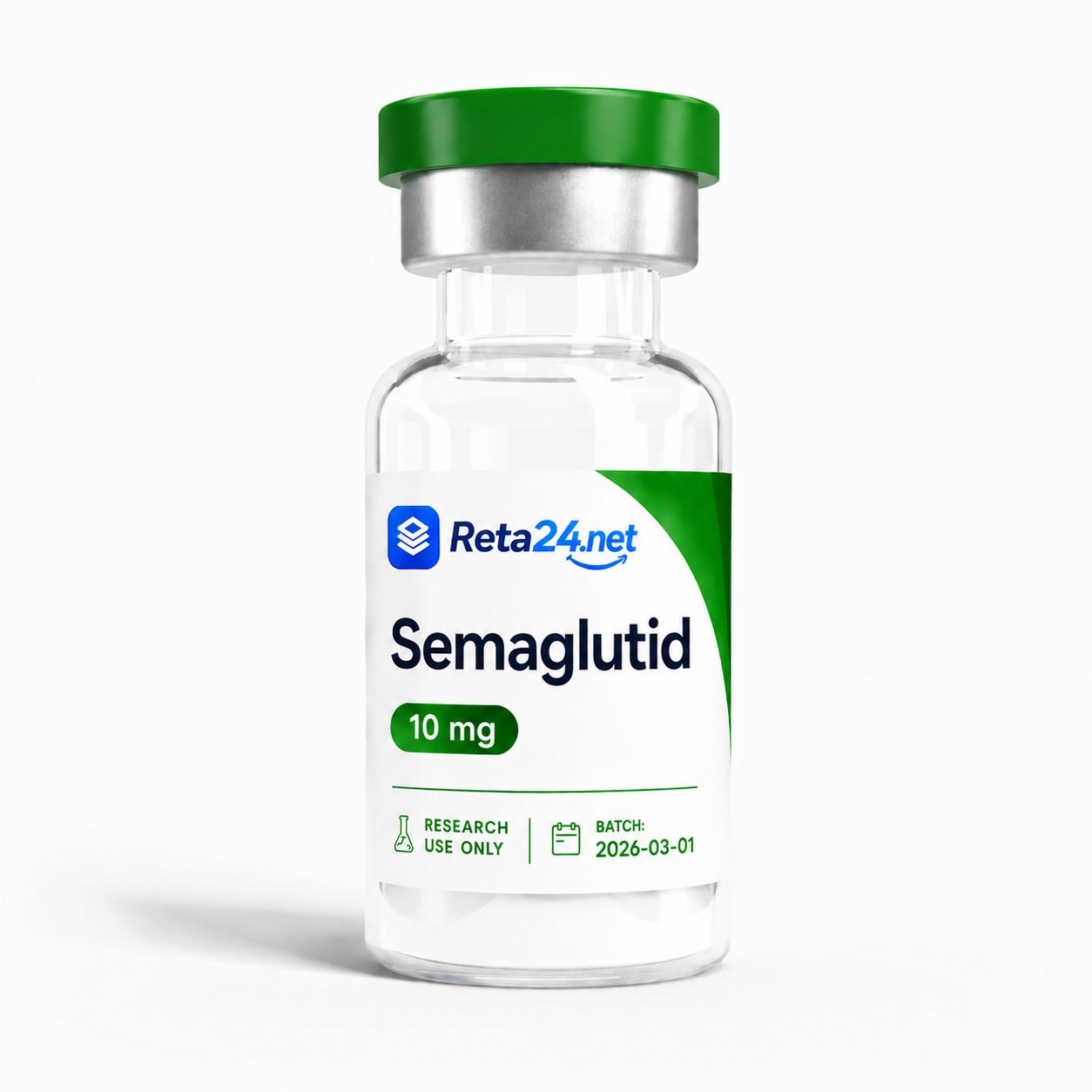
Semaglutide (also known as GLP-1 RA, brand name Ozempic/Wegovy) is a synthetic peptide consisting of 31 amino acids with a C18 fatty acid modification. It binds to the GLP-1 receptor with high affinity and specificity and, due to its long half-life (~7 days), is suitable for weekly use in research.
Mechanism of action
Semaglutide stimulates glucose-dependent insulin secretion in the pancreas, inhibits glucagon release, and slows gastric emptying. Furthermore, it activates central satiety centers in the hypothalamus, leading to reduced calorie intake.
Research findings
- Significant weight reduction in clinical phase III trials (STEP program)
- Cardiovascular benefits in type 2 diabetes (SELECT study)
- Pulsatile stimulation of glucose-dependent insulin secretion
- Inhibition of gastric emptying and central appetite suppression
- GLP-1R agonism with high selectivity
Technical data
| sequence | 31 amino acids with C18 fatty acid modification |
|---|---|
| Sum formula | C₁₈₇H₂₉₁N₄₅O₅₉S |
| Molecular weight | 4.113 Da |
| purity | ≥ 98 % (HPLC-tested) |
| form | Lyophilized powder |
| Half-life | ~ 7 days |
| storage | At -20 °C (long-term) or 2–8 °C (short-term) |
| Origin | Synthetic |
For research purposes only. Not intended for human use.
Reconstitution note 10 mg: This vial size offers a higher yield per reconstitution and is suitable for medium-term experimental series with multiple measurement points, without the need to restart in between.
Reconstitution: Example calculation
To achieve a working concentration of 10 mg/ml, reconstitute the 10 mg vial with 1 ml of sterile bacteriostatic water (BAC water). Slowly inject the water along the inside of the vial and gently swirl it instead of shaking. Detailed step-by-step instructions can be found in our user manual.
Frequently Asked Questions
Why choose 10 mg instead of 5 mg?
In trials with multiple repetitions or longer observation periods, the larger quantity of vials reduces the number of necessary reorders.
Is the purity identical in larger vials?
Yes — each batch is tested for the same purity regardless of vial size and delivered with its own certificate of analysis.
Quality assurance
Each production batch undergoes independent dual testing: HPLC analysis to determine purity and LC-MS analysis to definitively verify molecular mass and correct peptide sequence. Only after passing this test is a batch released.
Reviews
There are no reviews yet.